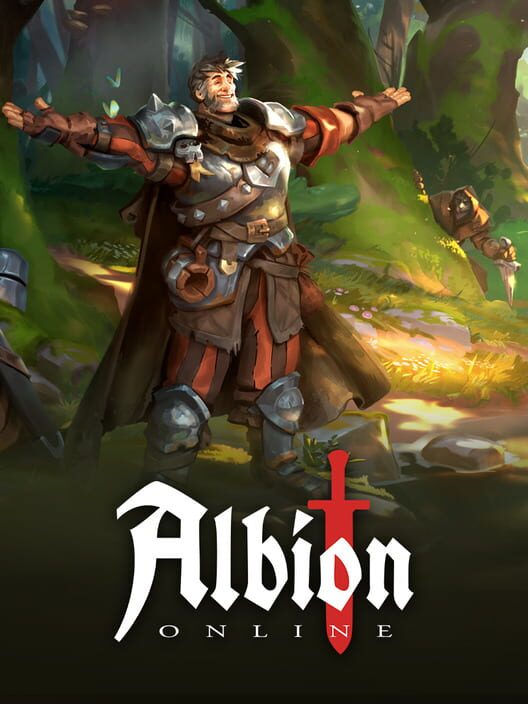
Albion Online Review: Is It Worth Playing?
Reviewed by TheTechVerdict Editorial · Last updated Apr 23, 2026 · Methodology
Editorial Score
Metascore
Critics
Why you can trust this review
- · Data sourced from IGDB and Metacritic (official sourced data — see data sources)
- · Scored against our public methodology
- · Affiliate links do not affect rankings — see editorial standards
About Albion Online
Albion Online is a sandbox MMORPG set in an open medieval fantasy world. The game features a player-driven economy where nearly every item is player-crafted. Combine armor pieces and weapons suited to your playstyle in a unique, classless "you are what you wear" system. Explore the world, take on other adventurers in thrilling battles, conquer territories, and build a home.
What is Albion Online?
Albion Online is a medieval fantasy sandbox massively multiplayer online role-playing game (MMORPG) developed and published by Sandbox Interactive. The game’s core premise is built on the principle of a player-driven economy and territory control, where almost every item in the world is crafted by players from resources gathered by players. There are no fixed character classes; instead, a player’s abilities and role are determined entirely by the gear they equip. Launched in 2017 after a successful crowdfunding campaign, the game has transitioned to a free-to-play model following an initial buy-to-play period. It is a true cross-platform title, allowing players on PC, Mac, Linux, iOS, and Android to share the same persistent world.
Gameplay
Playing Albion Online feels like engaging with a living, often ruthless, economic and political simulator dressed in MMORPG clothing. The core loop is straightforward: gather resources, craft equipment, and use that equipment to venture into more dangerous territories for better resources or combat. The ‘you are what you wear’ system is its most defining mechanic. Equip a sword and shield, and you gain tanky melee abilities. Swap to a frost staff and a scholar’s cowl, and you become a crowd-control mage. This offers tremendous flexibility but demands significant investment to level up (‘specialise’) in multiple gear sets.
The world is tiered by safety. Starting in blue and yellow zones, you cannot be fully killed by other players. The red zones introduce full-loot PvP with reputation penalties for attackers, while the black zones are the lawless frontier where full-loot PvP is constant and without consequence. This risk-reward spectrum dictates the entire pace of the game. A solo gathering run in a black zone is a tense, paranoid experience, while a large guild ‘zerg’ crashing into an enemy alliance’s territory is chaotic large-scale warfare.
The learning curve is steep, not necessarily due to complex mechanics, but because of the sheer depth of interlocking systems and the harsh consequences of failure. The tutorial is functional, but the real education comes from other players or external wikis. In our view, the game is at its best when played with a group, whether a small guild running ‘hellgates’ (instanced 2v2 or 5v5 battles) or a massive alliance fighting over territories. Solo play is viable, particularly in corrupted dungeons (instanced 1v1 PvPvE) or safe-zone activities, but it often feels like preparing for the more consequential group content.
Who is Albion Online for?
Albion Online is unequivocally for hardcore players who thrive on player-versus-player conflict and a high-stakes environment. It is a spiritual successor to older, punishing MMOs like Ultima Online or EVE Online, sharing their ethos of a single-shard world where player actions have real weight and loss is meaningful. The social and political meta-game—forming guilds, negotiating alliances, planning logistics for sieges—is as important as the combat itself.
It is not a game for the casual narrative-driven MMORPG fan seeking guided quests and a curated story. While there are PvE elements, including solo dungeons and group raids, they primarily serve as a means to acquire silver and gear for the PvP endgame. The game demands a significant time investment to remain competitive in its most contested areas. If you dislike the prospect of losing hours of gathered resources or a prized weapon to a gank squad, this is not the game for you. However, if the idea of building a reputation, engaging in cutthroat market speculation, and fighting for your guild’s sovereignty excites you, Albion offers an experience few other games can match.
Graphics and performance
Albion Online employs a distinctive top-down, isometric perspective with a stylised art direction that leans towards a painterly, slightly cartoonish aesthetic. The visual clarity is excellent, which is crucial for the often-chaotic battles where identifying enemy weapon types and spell effects instantly can mean the difference between victory and a costly death. The interface is clean and highly customisable, a necessity for a game that must function on mobile touchscreens as well as desktop PCs.
Performance is generally solid on a range of hardware. The game is not graphically demanding by modern AAA standards, which allows it to run smoothly on older PCs and mobile devices. The major performance challenge comes from large-scale battles involving hundreds of players, where even high-end systems can experience significant frame rate drops and ability delay due to server-side calculations. Sandbox Interactive has made consistent efforts to optimise these ‘zerg vs zerg’ encounters over the years, but participating in the largest fights still requires tolerating some technical clutter. For the majority of gameplay—small-scale skirmishes, gathering, dungeons—performance is reliably good.
Value for money
As a free-to-play title, Albion Online’s base value proposition is exceptional. There are no paywalls restricting content or zones; a free player can, in theory, access everything a paying player can. The premium subscription, called ‘Premium’, provides significant quality-of-life and progression boosts: increased fame (experience) and resource yield, reduced market fees, and the ability to earn ‘focus points’ used for efficient crafting and farming. It accelerates progress but does not grant direct power in combat.
The monetisation is handled fairly. The in-game store sells gold, which can be converted to silver (the game’s currency) or used for cosmetic skins and convenience items like extra character slots. Crucially, gold can also be purchased from other players with silver, meaning a dedicated free player can grind for silver to buy the gold needed for a premium subscription. This creates a viable, if time-consuming, path for non-paying players. In our view, the game offers near-limitless playtime for those invested in its systems. Whether that time is spent enjoyably depends entirely on your appetite for its particular brand of high-risk, high-reward gameplay.
Verdict
Albion Online is a niche, ambitious, and often brilliant MMORPG that succeeds on its own uncompromising terms. It is not for everyone, and the stark divide in its review scores—a high critic Metascore of 88 contrasting with a more mixed Steam user rating—illustrates this perfectly. Critics often laud its cohesive, player-driven design, while some players are driven away by its harsh penalties and the time commitment required.
We recommend Albion Online wholeheartedly to players who seek meaningful conflict, deep economic gameplay, and a true sense of community and consequence in a virtual world. It is one of the few MMOs where your actions genuinely matter, for good or ill. However, we cannot recommend it to players who prefer solo, story-focused adventures, or who have a low tolerance for losing hard-earned gear to other players. It is a demanding, sometimes frustrating, but ultimately rewarding experience for a specific audience. If the description of a sandbox where you write your own story through trade, politics, and combat sounds appealing, you owe it to yourself to try it. As a free download, there is no financial risk—only the digital risk of losing your boots in a black zone.
Frequently Asked Questions
Albion Online is free-to-play with a fair monetization model focused on cosmetics and premium time that accelerates progression but isn't mandatory. It's absolutely worth trying for fans of hardcore, player-driven sandbox MMOs. The deep crafting, economy, and large-scale PvP are unparalleled. However, its high-risk full-loot zones demand a specific mindset. If you enjoy games where your actions have real weight and consequence, and you thrive in a community-centric world, it offers immense value and hundreds of hours of engagement.
As a true sandbox MMO with no linear storyline, Albion Online has no traditional 'beat the game' endpoint. The core loop is about setting your own goals, such as mastering a trade, joining a major guild, or conquering territories. You can experience core activities within a few hours, but meaningful progression and endgame content like ZvZ (Zerg vs. Zerg) battles or high-tier crafting require hundreds of hours. It's a game designed for long-term commitment and community play, where the journey is the entire point.
Playing with friends is not just possible; it's essential for the full experience. The game is built around guilds and group play. You can form small parties for dungeons and open-world roaming, but the most rewarding content—like Hellgates, large-scale faction warfare, and controlling territories in the Black Zone—requires a coordinated guild. The game's systems for guild management, shared islands, and alliance warfare are deep, making it a fantastic choice for a dedicated group looking for a virtual world to conquer together.
Albion Online is currently available on PC, Mac, Linux, and iOS and Android mobile devices with full cross-play. There is no announced version for PlayStation or Xbox consoles. It is also not available on PC Game Pass or Xbox Game Pass. Its development philosophy centers on maintaining a single, unified cross-platform world, which makes a console port technically challenging. For now, players can access the same persistent world seamlessly from their computer or mobile device, but not from a console subscription service.
Both are sandbox MMOs with player-driven economies and skill-based progression, but they differ significantly in focus. Old School RuneScape is more quest-driven and PvE-focused with instanced, opt-in PvP. Albion Online is more intensely PvP-centric, with full-loot, open-world conflict as a central pillar. Albion's 'you are what you wear' class system offers more flexible build-crafting than OSRS's fixed skill levels. Visually, Albion uses a top-down, action-oriented combat system, while OSRS is point-and-click. Choose OSRS for a nostalgic, grind-heavy RPG and Albion for a ruthless, guild-based PvP sandbox.
Similar Games You Might Like
Rating Summary
Game Details
- Platform
- Multi-platform
- Released
- 2017
- Price
- Free to Play