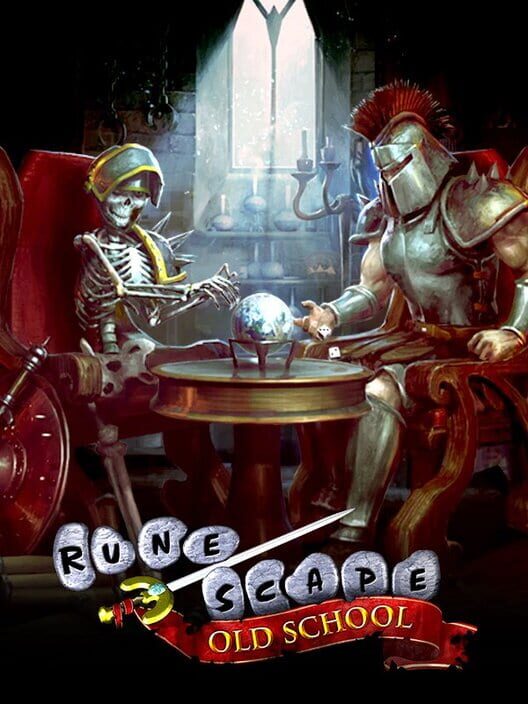
Old School RuneScape Review: Is It Worth Playing?
Reviewed by TheTechVerdict Editorial · Last updated Apr 23, 2026 · Methodology
Editorial Score
Metascore
Critics
Why you can trust this review
- · Data sourced from IGDB and Metacritic (official sourced data — see data sources)
- · Scored against our public methodology
- · Affiliate links do not affect rankings — see editorial standards
About Old School RuneScape
Relive the challenging levelling system and risk-it-all PvP of the biggest retro styled MMO. Play with millions of other players in this piece of online gaming heritage where the community controls the development so the game is truly what you want it to be!
What is Old School RuneScape?
Old School RuneScape (OSRS) is a massively multiplayer online role-playing game (MMORPG) that exists in a unique and fascinating state. It is not a remake or a remaster, but rather a preserved and evolving version of the 2007 iteration of the long-running RuneScape franchise. Originally launched by Jagex in 2013, it was created in direct response to player demand after significant changes to the main game, now known as RuneScape 3, alienated a portion of its community. The premise is classic high fantasy: you create a character in the world of Gielinor, a land of knights, dragons, wizards, and goblins, with the singular goal of writing your own story. There is no central, forced narrative. Instead, you are set loose in a vast, open world to train skills, complete quests, amass wealth, and engage with other players entirely at your own pace. The game is defined by this philosophy of player agency and its deep, interlocking systems.
Gameplay
Playing Old School RuneScape is an exercise in incremental progression and self-directed goals. At its core, it is a game of numbers and menus. You interact with the world primarily by clicking: to move, to attack a monster, to chop a tree, to cook a fish. This point-and-click interface, reminiscent of early 2000s browser gaming, is the foundation of everything. The initial experience can feel jarringly simple and even archaic. The learning curve is not steep in terms of mechanical skill, but is instead a vast, horizontal plain of knowledge. The game does not hold your hand. You must discover for yourself how to start a quest, which tools are needed for which skill, or the most efficient path to train.
This is where OSRS reveals its immense depth. There are 23 skills to train, ranging from combat staples like Attack and Strength to peaceful pursuits like Fishing, Woodcutting, and Farming. These skills are not isolated; they feed into each other in satisfying loops. Woodcutting provides logs for Firemaking and Fletching. Mining ore leads to Smithing, which creates armour for combat. The quests are another highlight, often eschewing simple "kill and fetch" tasks for elaborate puzzles, witty dialogue, and genuinely engaging storylines that require you to use your gathered knowledge and items. The endgame revolves around high-level PvM (Player vs. Monster) boss fights, competitive Player vs. Player (PvP) activities in the Wilderness, or the pursuit of prestigious skill capes. The gameplay loop is inherently grindy, asking for significant time investment for tangible progress. In our view, the satisfaction comes from setting a long-term objective—a specific quest, a skill level, a piece of gear—and methodically working towards it, watching your account grow in capability and wealth over dozens or hundreds of hours.
Who is Old School RuneScape for?
Old School RuneScape caters to a specific, dedicated audience. It is a game for patient players who enjoy tangible, long-term progression and complex system mastery over fast-paced action. It is exceptionally well-suited to those who like to play in a "second-screen" style; many activities are afk-able (away from keyboard), making it popular for players who are studying, working, or watching something else. It can be enjoyed casually in short daily bursts or as a hardcore obsession, with some players dedicating years to achieving "max" total skill levels.
While it can be a profoundly solitary experience, the multiplayer aspect is its social backbone. The world is shared, and cooperation is encouraged for certain bosses and activities. The economy is entirely player-driven through the Grand Exchange, and the community is one of the game's strongest assets, with a culture built around shared goals, humour, and nostalgia. It is similar in spirit to other grind-heavy, player-driven MMOs like classic 'EverQuest' or 'Guild Wars 1', though its top-down perspective and menu-based combat are distinct. In our view, it is not for players seeking a narrative-driven, cinematic experience or those with a low tolerance for repetitive tasks. It is a game for planners, optimisers, and those who find comfort in measurable, incremental growth.
Graphics and performance
The visual style of Old School RuneScape is its original, low-polygon 2007 aesthetic. Characters and environments are composed of simple, blocky models with low-resolution textures. Animations are basic and the user interface is functional and dated. This is not a critique, but a fundamental characteristic of the game's identity. For returning players, it is a potent dose of nostalgia. For newcomers, it is a stark, acquired taste that prioritises clarity and function over visual flair. The game has received some minor visual tweaks and new content is created in a style that matches the old, but the core look remains unchanged.
In terms of performance, the game is designed to run on virtually anything, from a basic laptop to a modern gaming PC, as it is based on technology from over a decade ago. The official client is stable and lightweight. However, the vast majority of the dedicated player base uses an approved third-party client called RuneLite. This client offers massive quality-of-life improvements, including GPU rendering for higher frame rates and uncapped draw distances, high-definition upscaling plugins, and a suite of informational overlays that almost feel necessary for efficient play. Using RuneLite, the game can look surprisingly crisp and run at buttery-smooth frame rates, modernising the experience while keeping the iconic art style intact.
Value for money
Old School RuneScape operates on a freemium model. A substantial portion of the game is free-to-play, offering access to two major cities, a selection of skills, and a limited number of quests. This acts as an extensive, unlimited demo. To access the full world, all 23 skills, and the vast majority of quests and content, a monthly membership subscription is required.
In terms of sheer volume of content, the value is extraordinary. The game is effectively endless. There are thousands of hours of gameplay available, from the early-game quests to the late-game raid and boss encounters. The subscription fee buys you access to a living, constantly updated world; the development team adds new quests, areas, and bosses several times a year, all shaped by player polls. For a dedicated player, the cost-per-hour of entertainment is minuscule. The question of value hinges entirely on your engagement with the core gameplay loop. If you find the grind satisfying and the world compelling, it represents one of the most cost-effective entertainment products available. If the click-heavy, slow-burn progression does not appeal, then no amount of content will justify the subscription.
Verdict
Old School RuneScape is a fascinating anachronism and a triumph of community-led game development. It is a game that proudly wears its dated mechanics and visuals not as a weakness, but as a testament to a specific, enduring design philosophy. Its depth is staggering, its world is rich with detail and humour, and its sense of progression is unrivalled in its tangibility.
We would recommend Old School RuneScape wholeheartedly to two types of players: those seeking a nostalgic return to a classic MMO experience, and newcomers with a high tolerance for grind who desire a game they can truly live in for years, playing at their own rhythm. Its strengths are its notable freedom, its deeply interwoven systems, and the genuine weight of every achievement.
We would caution against it if you require modern production values, guided experiences, or fast-paced action. The initial barrier of its old-fashioned presentation and opaque systems is real. The 3.9/10 Steam rating is largely a reflection of this initial shock and disputes over Jagex's anti-cheat measures, rather than the quality of the game beneath. The 77 Metascore from its initial release is perhaps a more accurate reflection of its critical reception as a specialised product.
In our view, Old School RuneScape is not for everyone, but for its intended audience, it is not just a game—it is a hobby, a spreadsheet, a second life, and one of the most compelling worlds in which to set your own, long-term adventure.
Frequently Asked Questions
Absolutely, but with a key understanding. The game itself is free-to-play with a substantial chunk of content, making it easy to try. The real value comes from the optional membership subscription, which unlocks the vast majority of the world and skills. Its worth is defined by your appetite for long-term, grind-centric progression within a deeply social and player-driven world. If you enjoy setting your own goals and relish incremental achievement, it offers potentially thousands of hours of engaging gameplay. The low system requirements and mobile compatibility add tremendous value.
Old School RuneScape is famously 'unbeatable' in a traditional sense. There is no definitive end. A player could consider completing all quests, which might take several hundred hours. However, true 'completion'—maxing all 23 skills to level 99—is a multi-thousand-hour endeavor for most. The game is designed as a perpetual journey, with new goals like bossing, collection logs, or PvP mastery always on the horizon. Measuring playtime here is about personal milestones, not a credits roll.
Yes, multiplayer is the core of the experience. You can team up for nearly all activities: tackle challenging cooperative boss raids like Chambers of Xeric, complete quests together, skill in the same areas, or engage in player-versus-player combat in designated zones. The game's social systems are robust, featuring clans (called 'Clans' or 'Friends Chats'), integrated voice chat on mobile, and a bustling economy reliant on player trading. Much of the endgame and most memorable moments are built around group play.
Old School RuneScape is officially available on Windows, macOS, Linux (via client), and crucially, on iOS and Android with full cross-platform play. There are no announced plans for console ports like PlayStation or Xbox, and it is not available on any subscription service like Game Pass or PlayStation Plus. The game's point-and-click interface and menu-heavy design are uniquely suited to PC and mobile touchscreens, making a traditional console adaptation unlikely.
Unlike theme-park MMOs like World of Warcraft, which guide you along a curated path of quests and raids, OSRS is a true sandbox. There is no main storyline you must follow. Progression is horizontal and self-directed, focused on raising independent skills like Mining, Fishing, or Runecrafting. Combat is simpler and tick-based, but the game's depth comes from its overwhelming freedom and interwoven systems. It trades high-fidelity graphics and cinematic storytelling for unparalleled player agency, a punishing-but-rewarding grind, and a uniquely influential player community that votes on new content.
Similar Games You Might Like
Rating Summary
Game Details
- Platform
- Multi-platform
- Released
- 2013
- Price
- Free to Play